
Skip to content

João Pessoa, Brazil

João Vitor Chaves

Full-stack developer and AI engineer, undergraduate in Data Science and AI at UFPB. I build systems with LLMs, RAG and agents, from data pipelines to production products. I learn by building, enjoy experimenting with new ideas, and like turning knowledge into projects that solve real problems. I am also passionate about sports, competition, and the process of always getting better.

LAVID · UFPB
Full-Stack Developer and AI Engineer on V4H, telehealth for the public system
TAIL
Computer Vision Researcher (Sports directorate)
TRIL Lab · UFPB
Researcher in LLMs, computer vision and OCR

About

Who I am

I am an undergraduate in Data Science and Artificial Intelligence at UFPB, and what I enjoy most is building things that leave the drawing board. I am interested both in understanding how artificial intelligence works and in figuring out how to turn it into software someone can actually use.

I am currently part of LAVID/UFPB, where I work as a full-stack developer and AI engineer on V4H, Wisecare's telehealth platform used by SUS, Brazil's public health system. It is where I face problems that go beyond making an application run: a real system in production, health information, and integrations with public services such as CNES, the national registry of health facilities.

I also do research at TRIL Lab, taking part in projects developed with industry partners. That is where I explore the areas of AI that interest me the most, such as LLM-based agents, computer vision and OCR, trying to understand not only how these technologies work, but where they actually make sense.

Another important part of my path is TAIL, the first academic AI league in Paraíba. I joined as a trainee and now take part in the directorate of Computer Vision and Sports, where we are building, as a team, an automated scouting system for 3x3 basketball. It also brings together two things that are part of who I am: technology and sports.

In the end, that is what drives me: learning by building, testing ideas, and understanding how technology can be applied to real problems.

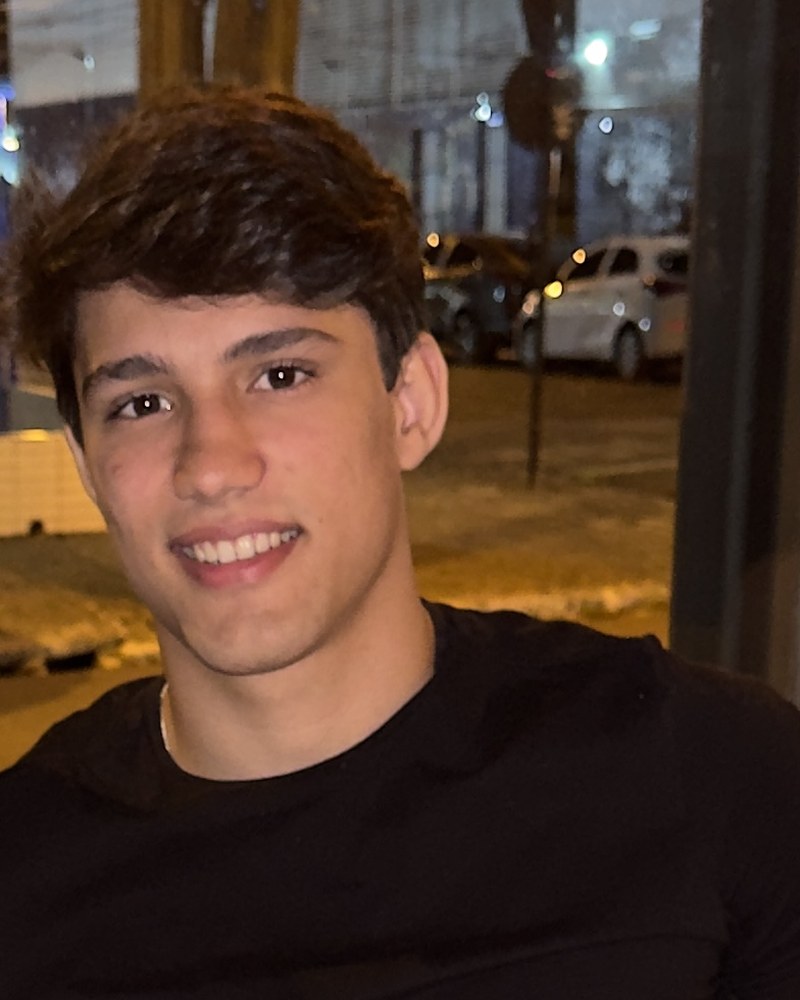
Portrait of João Vitor Chaves

Tools

AI & ML
  • Python
  • PyTorch
  • LangChain
  • LLMs
  • Computer Vision
  • Whisper
Backend
  • TypeScript
  • Node.js
  • Express
  • FastAPI
  • PostgreSQL
  • Redis
Frontend
  • React
  • Next.js
  • Redux
  • Tailwind CSS
Data & Infra
  • Docker
  • RabbitMQ
  • Airflow
  • pandas
  • pgvector
  • Git

Experience

Career

Now

Jun 2026 — Present

Full-Stack Developer and AI Engineer

LAVID · UFPB

Building V4H, Wisecare's telehealth platform used by SUS, Brazil's public health system, integrated with the AGHUse health record, CNES, the national registry of health facilities, and Keycloak authentication. I built the processing and persistence of consultation transcripts and an AI layer on top of them: citation-grounded search, clinical fact extraction per participant and SOAP progress-note drafts. I work on the Node and TypeScript backend (Express, TypeORM, InversifyJS, BullMQ and RabbitMQ, Socket.IO) and on the React frontend with Redux-Saga, and I am rebuilding session and video-call management to replace the Jitsi dependency with an in-house solution.

  • TypeScript
  • Node.js
  • React
  • PostgreSQL
  • RabbitMQ
  • LLMs
  • Docker

Mar 2025 — Present

Researcher

TRIL Lab · UFPB

Research, development and innovation with industry partners, focused on LLM-based agents, OCR and computer vision. Projects: Editora BP (May 2026 — present), an AI platform for producing annotated exams, with a 10-step LangGraph workflow, RAG over curated sources and expert review, which cut the first draft of an exam from one or two days to about ten minutes and the cost per question by 10x; and TutorIA (Dec 2025 — Mar 2026), ENEM tutoring on WhatsApp that solves questions from photos, grades essays and answers doubts with RAG.

  • LLMs
  • LangGraph
  • RAG
  • FastAPI
  • OCR
  • Python

Aug 2026 — Present

Computer Vision Researcher

TAIL

At the Technology and Artificial Intelligence League, the first academic AI league in Paraíba, I take part in the Computer Vision/Sports directorate. With the team, I develop an automated scouting system for 3x3 basketball that extracts player metrics from broadcast footage, adapting a 5x5 pipeline (detection, segmentation, court keypoints and pose) to half-court play and evaluating how well the models generalize. In progress.

  • Computer Vision
  • PyTorch
  • Python
  • YOLO

Before

Nov 2025 — Jul 2026

Trainee

TAIL

With the trainee cohort, I built Pauta, a civic-tech platform where citizens report urban problems with a photo and location. A vision LLM classifies each report (with manual review when confidence is low), reports become geolocated points in PostgreSQL/PostGIS shown on a map and community feed, and notifications run on an event outbox consumed by Celery workers.

  • Next.js
  • FastAPI
  • PostGIS
  • pgvector
  • Celery
  • Supabase

Nov 2025 — Jun 2026

Researcher, data engineering

ARIA · UFPB

Owned the automated ingestion pipeline for LOTEP, the Paraíba state lottery: it detects new spreadsheets from every licensed operator in the state, matches each one to a known layout or infers and registers a new layout automatically, and runs vectorized auditing and cleaning up to the load into a PostgreSQL data warehouse, covering over 20 GB of data and millions of betting records. Metadata-driven JSON configuration, anti-fraud validations, event-driven architecture on Kafka and a FastAPI gateway validated by schema, LGPD-compliant. Cut data preparation for the analytics team from 6 hours to 40 minutes.

  • Kafka
  • FastAPI
  • PostgreSQL
  • Python
  • LGPD

Jun 2025 — Dec 2025

AI Engineer (internship)

Zoox Smart Data

Agent generator that solved a bottleneck in CrewAI: instead of writing code, the user defines the agent's role, goal and context through an interactive interface, and the application generates ready-to-use code and configuration.

  • CrewAI
  • Python
  • LLMs

Nov 2024 — Apr 2025

Participant (cohort 2024.2)

Trilha · UFPB

Free programming, projects and mentoring program at UFPB, run by students, with classes in Python, web and data.

First place among six teams in the program hackathon (May–Jun 2025), with PixelMind

Projects

Selected work

Systems I built from scratch, most of them as lead developer, involving AI agents, multimodal processing and data engineering.

LembreMe

Personal assistant that runs entirely on WhatsApp: finances, tasks, reminders, goals, and routines in natural language

LembreMe is a personal assistant that operates entirely through WhatsApp. The user types, sends audio, or photographs a receipt, and the agent interprets, records, and returns what's needed: expenses and income (including fixed and installment ones), tasks, reminders, financial and personal goals, notes, and nearby restaurant searches by GPS or city.

  • Python
  • FastAPI
  • Node.js
  • whatsapp-web.js
  • LangChain
  • +11

Pauta

Municipal political transparency: citizens report an urban problem, track its resolution, and get closer to the people who represent them

Pauta was born out of a concrete gap: most people don't know who their city councilors (vereadores) are or what they propose, and complaints about the city end up as venting that never reaches whoever could actually fix them. The platform links the three ends, citizen, urban issue, and representative, into a single flow.

  • Python 3.12
  • FastAPI
  • SQLAlchemy
  • Celery
  • Next.js 16
  • +13

PixelMind

Video editor that accepts natural language commands, first place at the Trilha hackathon

PixelMind lets you edit video by talking to the system. Instead of hunting for the clip on the timeline, the user types what they want (for example, removing the part where a certain topic is discussed) and the system locates and executes the cut.

  • Next.js
  • TypeScript
  • Tailwind CSS
  • Node.js
  • Python
  • +6

Vero

A clinical platform that follows the consultation in real time and runs the patient's pre-visit intake on WhatsApp

Vero gives doctors cognitive support while the visit is happening. Audio is captured in the browser and transcribed via streaming; on top of that transcript, a clinical AI service raises diagnostic hypotheses, flags red flags, suggests courses of action, and drafts a prescription. The doctor follows all of this in a clinical reasoning panel with chat, marking what's useful and dismissing the rest, then closes the visit with everything consolidated.

  • TypeScript
  • React 19
  • Vite
  • Tailwind CSS 4
  • TanStack Query
  • +14